A new education initiative born in the Matakana–Leigh community is using bees to help children understand biodiversity, climate resilience and their connection with the natural world — with plans to take the programme nationwide.
Bee Resilient has launched its first flagship programme at Leigh School, combining hands-on beekeeping, native bee science, pollinator biodiversity, climate adaptation, citizen science, sensory learning and resilience activities.
The programme is designed to help children understand not only what climate change means, but what it means for their own community — and what practical actions they can take.
Students are learning about honeybees and native pollinators, examining bees and pollen through microscopes, exploring the sounds and vibrations of a hive through cymatics, practising simple resilience techniques such as “bee breathing”, and investigating local environmental hazards.
The programme will culminate in a student-informed Climate Adaptation Plan for Leigh School, bringing together what the children have learned about biodiversity, pollinators, food resilience, local hazards and community preparedness.
Bee Resilient founder Kelly Hamilton says the bigger vision is to take the programme well beyond Leigh.
“Our dream is to see beehives and pollinator education in schools throughout New Zealand,” Hamilton says.
“We want children to be able to learn directly from a living hive, understand the importance of pollinators and biodiversity, and then take that curiosity home with them.
“If a child goes home wanting to plant flowers, grow food, protect pollinators or even encourage their family to keep bees, that learning starts to ripple out through the whole community.”
The Harmonic Hive — a classroom on wheels
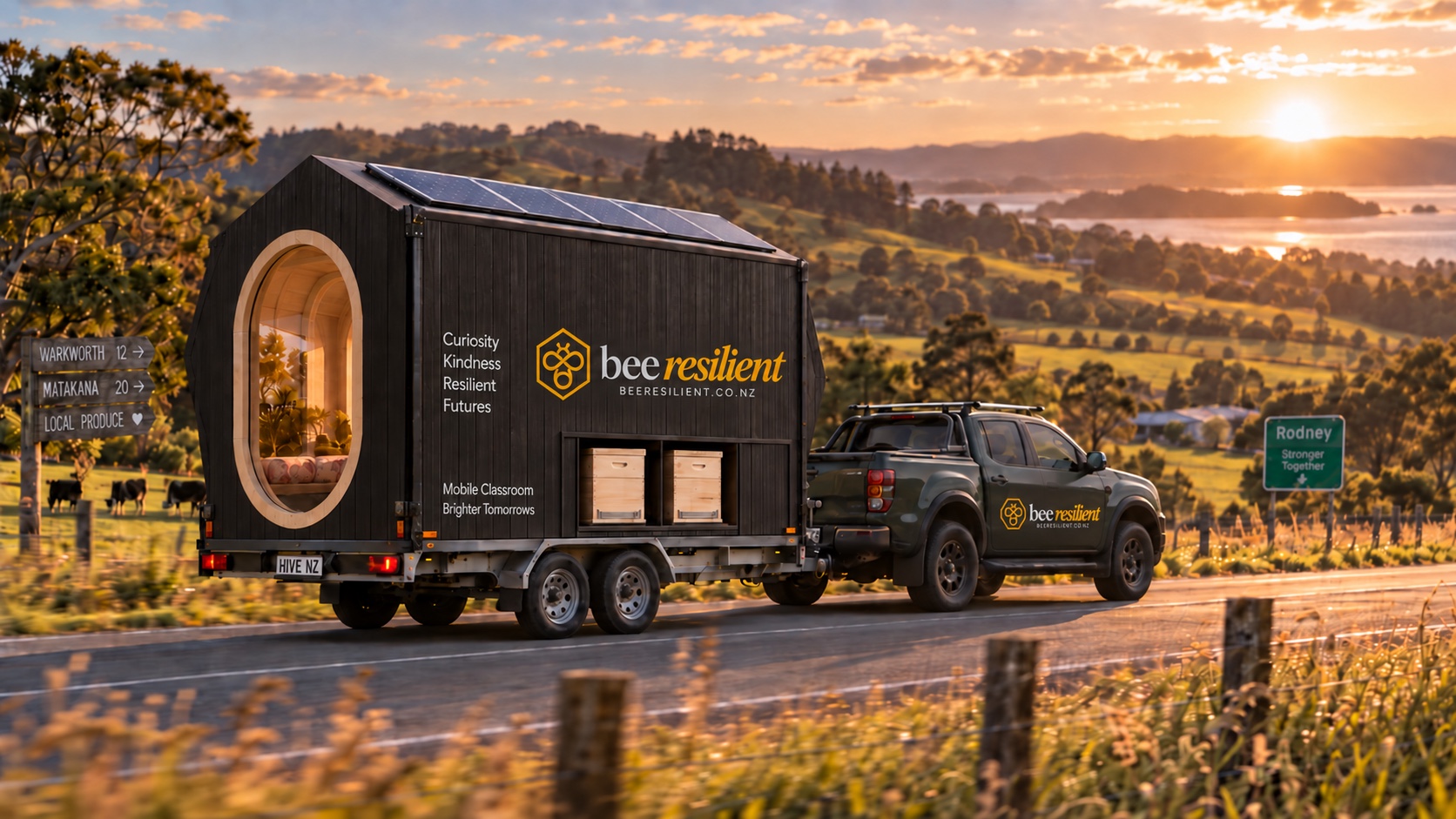
At the centre of Bee Resilient’s next phase is an ambitious concept called The Harmonic Hive — Bee Resilience Lab, a purpose-built mobile bee and biodiversity classroom designed to travel directly to schools and communities.
The roaming laboratory is envisioned as a self-contained learning environment equipped with microscopes, an observation hive, bee suits, sensory and science equipment, solar power and technology allowing children to experience the sounds and vibrations of a working hive.
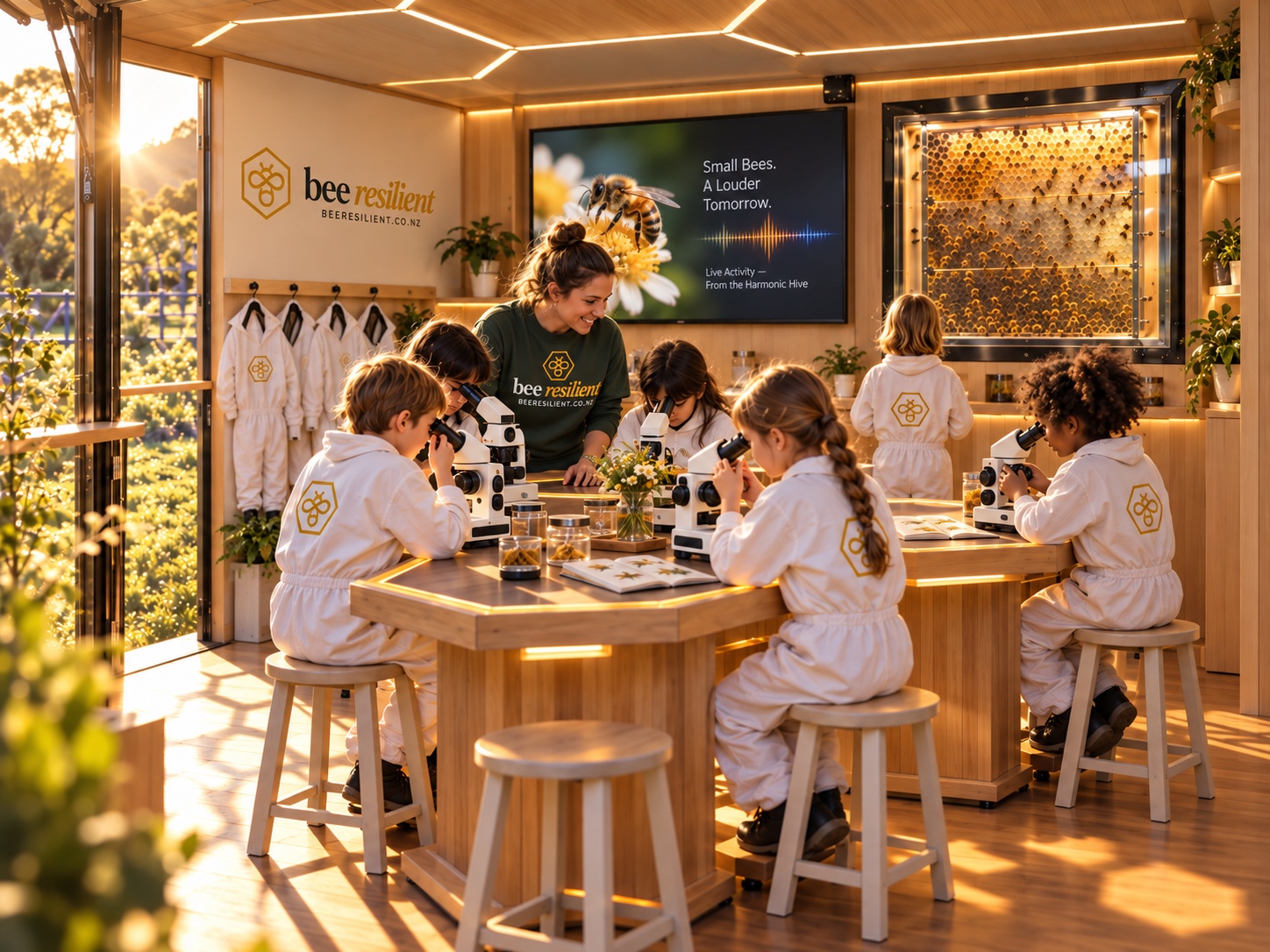
The aim is to remove some of the barriers schools face in accessing specialist environmental education by bringing the classroom to them.
“We have already had interest from other local schools, and ultimately we would love to take the Harmonic Hive throughout Aotearoa,” Hamilton says.
“One day, we would even love to take it all the way to the Beehive in Wellington so children can share what they have learned about pollinators, biodiversity and climate resilience with the people helping shape New Zealand’s future.”
Schools will be able to register their interest through beeresilient.co.nz.
From recovery to resilience
The idea for Bee Resilient grew from Hamilton’s own experience following the Auckland Anniversary floods and Cyclone Gabrielle.
After becoming involved in community recovery and later working within the Auckland Council Recovery Office, Hamilton began thinking more deeply about how communities prepare for and recover from major events.
Bee Resilient initially grew from an idea around using beekeeping as a grounding activity for people experiencing trauma.
It soon evolved into a broader question: how can we help the next generation become more resilient before disaster happens?
“Bees became the perfect teachers,” Hamilton says.
“A hive is about communication, adaptation, community and collective action. Every bee has a role, and small actions together make an enormous difference.
“Those same lessons translate beautifully into resilience education for children.”
Building the programme together
Bee Resilient received $40,000 through Auckland Council’s Te Ara Urutau – Climate and Emergency Ready Fund, helping support facilitated workshops, school sessions, educational resources, climate adaptation work, programme coordination and the development of the school adaptation plan.
The programme also brings specialist knowledge into the classroom, including learning around native bees and pollinators with Ngarie, alongside beekeeping, biodiversity, climate hazards, sensory learning and resilience.
Hamilton says the funding has provided an important foundation, but considerably more support will be needed to deliver the next phase.
“We have a big vision, and we can’t do it alone,” she says.
“We warmly welcome both corporate partners and private donors who want to help us expand into more schools, build the roaming Bee Resilience Lab and give more children across Aotearoa access to hands-on environmental education.”
Forest classrooms, honey tastings and corporate experiences
BeeTopia will also play an important role in the programme’s next phase.
Over summer, Bee Resilient is working towards creating a Harmonic Hive Lab experience at BeeTopia, giving children and families a taste of what the future roaming classroom could become.
The experience is expected to include microscopes, observation hives, bee science, hive sounds and vibrations, sensory activities and practical pollinator learning.
A Forest Classroom is also being developed at BeeTopia, creating an outdoor learning environment where children can explore soil, plants, fungi, insects, pollinators and the relationships between them.
The same setting will also offer opportunities for adults and businesses.
Bee Resilient plans to introduce Forest Boardrooms, where corporate teams can step away from conventional meeting rooms and spend time in nature for strategy sessions, leadership days and resilience-focused experiences.
These could be combined with guided honey tastings, hive experiences and pollinator education, offering businesses a way to engage directly with the project they are supporting.
Corporate partners will also be invited to register their interest to become among the first organisations to experience and trial the Harmonic Hive before it begins travelling more widely.
“For us, partnership is about much more than funding,” Hamilton says.
“We want organisations to experience what we are building, understand why it matters and become part of the community around it.”
Small wings. Big impact.
Hamilton says the ultimate goal is to make resilience education hopeful, practical and memorable.
“Resilience doesn’t have to feel frightening or overwhelming for children. Bees give us a beautiful way to start that conversation.
“We want children to understand that we are part of nature, not separate from it, and that their actions matter.
“Our dream is to see more children learning from real hives, more beehives in schools, more pollinator-friendly backyards and thousands of young bee advocates across Aotearoa.
“Imagine the ripple effect.”
Small wings. Big impact.
For school registrations, partnerships, donations or corporate experiences, visit beeresilient.co.nz.
Media contact
Kelly Hamilton · Bee Resilient · info@beeresilient.co.nz