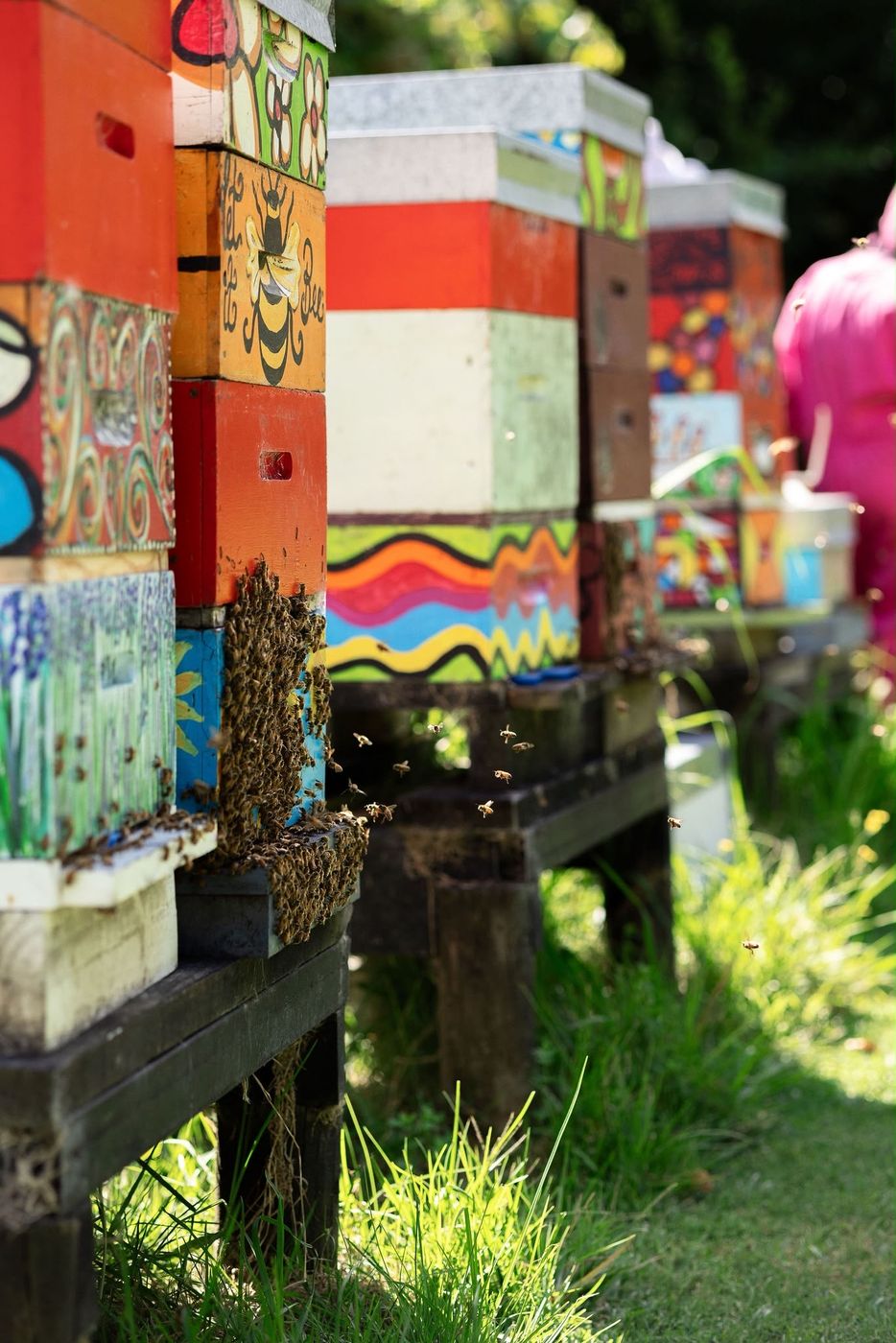
What's the best time for a class to observe the hive?
Late morning through early afternoon on a mild, still day, once the bees have warmed up and are flying. Cold, wet or very windy mornings are quiet at the hive — good for a classroom lesson instead, saving the visit for better weather.
Do students need any experience or equipment?
No. A notebook or clipboard is enough for most observations; a phone camera helps for anything worth a closer look later. For the hive itself, suits, veils and gloves are provided and a registered beekeeper is always present.
Will anyone get stung?
It's uncommon. Bees are calm when approached slowly and without sudden movement, and almost never sting unless they feel the hive itself is threatened. Anyone with a known bee-sting allergy should tell their teacher before a hive visit so the session can be planned around it.
Can a whole class take part, or just small groups?
Both. Large groups usually rotate through the hive in twos and threes while the rest of the class works on garden or classroom observations, so nobody is standing around waiting.
How do we know what species we've found?
Log what you can see — colour, size, behaviour — and add a photo if you have one. A beekeeper or one of our science partners can help confirm anything uncertain; you don't need to identify the species yourself before recording it.
What happens to the observations we submit?
They go straight into Bee Resilient's own records — not a third-party platform — so your school can see its own data over time and we can track what's happening across the programme as more schools join.
We have more questions — who do we ask?
Email us any time, or raise it at your school's next session with the Bee Resilient team.
This data is yours
Observations submitted here are stored directly — through Netlify Forms into your own Google Sheet — not on a third-party platform. Bee Resilient and your school hold the only copy.
New observation
Log what a class or group recorded at the hive or in the garden.